Hatco Toast King Conveyor Toaster vs Hatco Toast-Qwik Conveyor Toaster: Spec Comparison
As an Amazon Associate we earn from qualifying purchases. Links on this page are affiliate links.
When comparing the hatco tk 100 toast king conveyor vs tq 800 toast qwik conveyor toaster, you are looking at two commercial-grade units from the same brand. Both models are designed for continuous toasting in busy kitchens. The main difference lies in their physical footprint and construction. The TK-100 is a taller, heavier unit, while the TQ-800 is more compact and lighter. These size variations impact how they fit into your workspace.
Key differences
| Aspect | Hatco Toast King Conveyor Toaster | Hatco Toast-Qwik Conveyor Toaster |
|---|---|---|
| Width | 17.6 inches | 14.5 inches |
| Height | 33 inches | 16.6 inches |
| Length | 22 inches | 22.8 inches |
| Weight | 88 pounds | 62 pounds |
Which one should you choose?
Choose Hatco Toast King Conveyor Toaster if
- You need a taller unit that may offer more vertical clearance or different mounting options
- You prioritize a slightly shorter footprint for your counter space
- You require a heavier, more substantial build for stability
Choose Hatco Toast-Qwik Conveyor Toaster if
- You have limited counter width and need a narrower appliance
- You want a significantly lighter unit that is easier to move or reposition
- You prefer a more compact vertical profile for low-ceiling areas
Verdict: The Hatco TK-100 suits kitchens that need a taller, heavier-duty frame. The Hatco TQ-800 is better for spaces with tight width constraints or where a lighter unit is preferred. Choose based on your specific dimension limits.
Size and Weight Comparison
Physical footprint
The Hatco TK-100 measures 17.6 inches wide and 22 inches long, while the TQ-800 is slightly narrower at 14.5 inches wide but longer at 22.8 inches. You need to check your counter space carefully. The TK-100 has a more square footprint, whereas the TQ-800 extends further forward. Both units are designed for commercial use, so their dimensions impact how they fit into your workflow. If you have limited width, the TQ-800 might fit better. If you need less depth, the TK-100 is the better choice. Measure your available space before deciding.
Height clearance
Height differences matter if you have cabinets above your counter. The Hatco TK-100 stands 33 inches tall, which is significantly higher than the TQ-800 at 16.6 inches. This makes the TQ-800 much easier to place under standard overhead shelving or low-hanging fixtures. The TK-100 requires more vertical clearance, which could be a constraint in some kitchen layouts. You should measure the space above your intended installation spot. The lower profile of the TQ-800 offers more flexibility for placement in busy commercial kitchens.
Unit weight
Weight affects stability and mobility. The Hatco TK-100 weighs 88 pounds, while the TQ-800 weighs 62 pounds. The TK-100 is heavier, which may provide more stability during operation but makes it harder to move if needed. The TQ-800 is lighter, making it easier to reposition or clean around. Both units are built for commercial environments, so both are substantial. However, the difference of 26 pounds is noticeable. If you need to move the unit occasionally, the lighter TQ-800 is more practical. For fixed installations, the weight difference is less critical.
Cooking function
Both units share the same primary cooking function: toasting. The Hatco TK-100 and the TQ-800 are both designed specifically for toasting bread products. They use conveyor systems to move items through the heating chamber. This means you do not need to manually flip the bread. Both models support continuous toasting, which is essential for high-volume operations. The core function is identical, so your choice will depend on other factors like size and speed. You get the same basic toasting capability from either unit.
Construction materials
Both toasters are constructed from stainless steel, as listed in the specifications. This material is durable, easy to clean, and resistant to corrosion, which is important in commercial kitchens. The TQ-800 description mentions heavy-duty commercial-grade materials, reinforcing the durability of the build. The TK-100 also features a stainless steel finish. You can expect both units to withstand the demands of daily professional use. The material choice is standard for this category, ensuring longevity and hygiene. There is no difference in the primary construction material between the two models.
Choose Your Ideal Commercial Toaster
High-volume kitchen needing speed
The Hatco TQ-800 weighs 62 pounds and measures 22.8 inches long. Its compact footprint saves space while handling large batches. The variable speed control lets you adjust browning levels precisely. This model ensures consistent toasting for busy operations without manual flipping, making it ideal for peak service hours.
Kitchen with limited width space
At 14.5 inches wide, the Hatco TQ-800 fits narrower counters better than the TK-100. It extends to 22.8 inches in length but remains lighter at 62 pounds. This horizontal design maximizes utility in tight areas. You get professional throughput without sacrificing valuable counter width in your commercial kitchen setup.
Heavy-duty continuous use need
The Hatco TK-100 weighs 88 pounds and stands 33 inches tall. Its robust stainless steel construction supports heavy daily use. The wider 17.6-inch base provides stability for continuous conveyor operation. This unit is built for durability in demanding environments, ensuring reliable performance for toasting bread and bagels throughout long shifts.
The products compared

Hatco Toast King Conveyor Toaster
Best for: commercial high-volume toasting needs
- Cooking Function
- Toast
- Color
- Stainless Steel
- Dimensions
- 22 × 17.6 × 33 inches
- Weight
- 88 pounds
View on Amazon: Hatco Toast King Conveyor Toaster Affiliate link
The Hatco Toast King is a stainless steel conveyor toaster designed for commercial toast preparation. It measures 22 inches in length, 17.6 inches in width, and 33 inches in height. The unit weighs 88 pounds, indicating a heavy, stable build for high-volume environments. This model focuses solely on the cooking function of toasting. Its dimensions and weight suggest it is built for durability and consistent performance in professional kitchens.
Pros
- Stainless steel construction for durability
- 22-inch length accommodates standard bread sizes
- 88-pound weight provides stability during operation
- Dedicated toasting function ensures focused performance
Cons
- Large footprint requires significant counter space
- Heavy build makes relocation difficult
- Limited to toasting only, no other cooking functions
Good fit if
- You need a durable, heavy-duty unit for high-volume toasting
- You have ample counter space for a 22-inch appliance
- You prefer stainless steel construction for easy cleaning
Skip if
- You have limited counter space or need a compact appliance
- You require multiple cooking functions beyond toasting
- You need a lightweight unit for frequent relocation
Verdict: Hatco Toast King Conveyor Toaster is a robust, heavy-duty option for commercial kitchens needing reliable, high-volume toasting. Its substantial weight and stainless steel build ensure stability and durability, making it ideal for busy environments where space is not a constraint.
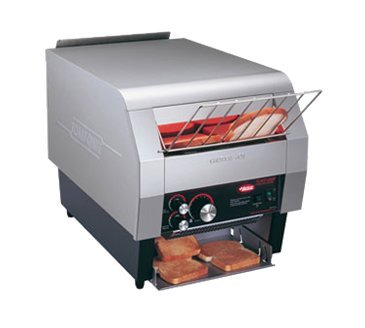
Hatco Toast-Qwik Conveyor Toaster
Best for: High-volume commercial toasting
- Cooking Function
- Toast
- Dimensions
- 22.8 × 14.5 × 16.6 inches
- Weight
- 62 pounds
View on Amazon: Hatco Toast-Qwik Conveyor Toaster Affiliate link
The Hatco Toast-Qwik is a commercial conveyor toaster designed for high-volume foodservice. It features a continuous belt system that moves bread through the toasting chamber without manual flipping. You get adjustable browning control via variable speed settings to customize toast darkness. The unit measures 14.5 inches wide, 22.8 inches long, and 16.6 inches tall. Weighing 62 pounds, it offers a space-efficient horizontal design suitable for busy kitchens needing consistent results.
Pros
- Continuous conveyor belt eliminates manual flipping
- Variable speed settings for precise browning control
- Compact horizontal design saves counter space
- Heavy-duty commercial-grade construction
Cons
- Limited to toasting function only
- Heavy 62-pound build requires sturdy support
- No visible internal viewing window mentioned
Good fit if
- You need high-throughput toasting for busy shifts
- You want consistent browning without monitoring
- You have limited counter space but need commercial output
Skip if
- You need to toast items other than bread
- You prefer manual slot-toaster control
- You require a lightweight appliance for frequent moving
Verdict: Hatco Toast-Qwik Conveyor Toaster suits high-volume kitchens needing automated, consistent toasting. It fits operations prioritizing speed and space efficiency over manual control.
Specifications side by side
| Spec | Hatco Toast King Conveyor Toaster | Hatco Toast-Qwik Conveyor Toaster |
|---|---|---|
| Cooking Function | Toast | Toast |
| Color | Stainless Steel | not stated |
| Dimensions | 22 × 17.6 × 33 inches | 22.8 × 14.5 × 16.6 inches |
| Weight | 88 pounds | 62 pounds |
Frequently asked questions
Which Hatco conveyor toaster is better for small commercial kitchens?
The Hatco Toast-Qwik Conveyor Toaster is better for smaller spaces. It weighs 62 pounds and measures 14.5 inches wide. The Hatco Toast King weighs 88 pounds and is 17.6 inches wide. The lighter, narrower Qwik model saves floor space while still delivering high-volume toasting results.
Does the Hatco Toast King offer stainless steel construction?
Yes, the Hatco Toast King features a stainless steel build. This material ensures durability and stability in busy environments. The unit also weighs 88 pounds, which adds to its solid presence. This heavy-duty construction makes it suitable for kitchens where equipment must withstand constant, rigorous use.
What is the height difference between the two models?
The Hatco Toast King is significantly taller at 33 inches high. The Hatco Toast-Qwik is much lower at 16.6 inches high. You should consider your ceiling clearance and ventilation hood requirements. The lower profile of the Qwik model may fit better under standard overhead equipment.
Is the Hatco Toast-Qwik suitable for high-volume operations?
Yes, the Hatco Toast-Qwik is designed for high-volume commercial toasting. It prioritizes speed and space efficiency over manual control. This makes it ideal for operations that need consistent, automated toasting without requiring extensive counter space. It handles large batches efficiently in busy settings.
How do the lengths of the two toasters compare?
The Hatco Toast-Qwik is slightly longer at 22.8 inches. The Hatco Toast King measures 22 inches long. The difference is minimal, but the Qwik extends further. You should verify that your kitchen layout can accommodate this extra length if you choose the Qwik model.
Which model is heavier and more stable?
The Hatco Toast King is heavier at 88 pounds. The Hatco Toast-Qwik weighs 62 pounds. The greater weight of the Toast King contributes to its stability. This makes it a robust option for kitchens where equipment needs to remain firmly in place during continuous operation.
Can the Hatco Toast King handle continuous toasting?
Yes, the Hatco Toast King is built for continuous toasting. It is a robust, heavy-duty option for commercial kitchens. Its stainless steel construction and substantial weight ensure reliability. This model is ideal for busy environments where consistent performance and durability are required for high-volume output.